
Starting an online business can be an attractive option for entrepreneurs, manufacturers, retailers, and small businesses. Amazon provides sellers with access to a large online customer base and tools for managing products, orders, payments, and marketplace operations. If you are wondering How to Start a Business on Amazon, the process begins with choosing the right products, preparing your business information, registering as a seller, creating product listings, and managing orders effectively.
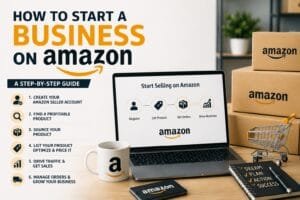
What Do You Need to Start a Business on Amazon?
Before learning How to Start a Business on Amazon, prepare the basic information and resources required for your business.
◆ Product or product category
◆ Seller and business information
◆ Bank account details
◆ Applicable tax information
◆ Product images
◆ Product descriptions
◆ Pricing information
◆ Inventory
◆ Packaging and shipping arrangements
The exact registration and documentation requirements can vary depending on your business structure, products, and applicable marketplace requirements.
Explore more:Amazon Account Management Services India: 7 Best Tips
Why Start a Business on Amazon?
Amazon can provide several opportunities for businesses that want to establish an online sales channel.
✦ Access to Online Customers
Selling through a large marketplace can help businesses reach customers beyond their local area.
✓ Suitable for Different Business Sizes
Manufacturers, retailers, wholesalers, small businesses, and emerging brands can use marketplace selling according to their business models.
★ Multiple Product Categories
Businesses can sell products across many categories, subject to Amazon’s applicable requirements and restrictions.
🚀 Opportunity to Expand
Once a seller develops an organized process, the business can gradually add products, improve listings, and explore additional marketplaces.
How to Start a Business on Amazon Step by Step
If you are learning How to Start a Business on Amazon, follow a structured approach instead of uploading products without preparation.
✅ Step 1: Choose What You Want to Sell
Start by identifying products that match your knowledge, budget, target customers, and available resources.
Consider:
◆ Product demand
◆ Competition
◆ Purchase cost
◆ Selling price
◆ Packaging requirements
◆ Shipping considerations
◆ Expected margins
◆ Product restrictions
Avoid choosing products only because they appear popular. Research the market before investing in inventory.
➤ Step 2: Research Your Competition
Search Amazon for similar products and study how competing sellers present their products.
Look at:
✓ Product titles
✓ Images
✓ Descriptions
✓ Prices
✓ Customer reviews
✓ Product features
✓ Variations
This can help you understand how customers compare similar products.
★ Step 3: Prepare Your Seller Information
Keep the required business, identity, tax, bank, and product-related information ready before beginning seller registration.
Accurate information can help reduce avoidable verification issues.
◆ Step 4: Register as an Amazon Seller
Create your seller account through Amazon’s seller-registration process and provide the information requested during onboarding.
Complete the applicable verification steps and review the marketplace requirements relevant to your business and product category.
✦ Step 5: Create Your Product Listing
Once your seller account is ready, prepare your product listings carefully.
A listing can include:
◆ Product title
◆ Product images
◆ Product description
◆ Key features
◆ Product specifications
◆ Category
◆ Price
◆ Inventory
◆ Applicable product identifiers
Accurate and complete information helps customers understand what they are purchasing.
Explore more:Amazon Listing Optimization Service Delhi NCR: 7 Powerful Strategies to Boost Your Product Visibility Successfully
How to Choose Products for Your Amazon Business
Product selection is one of the most important parts of How to Start a Business on Amazon.
✓ Research Demand
Look for products with genuine customer demand rather than relying only on temporary trends.
✦ Calculate Your Costs
Consider product cost, packaging, marketplace fees, shipping, advertising, returns, taxes, and other business expenses.
◆ Study Competition
Highly competitive categories may require stronger branding, pricing, product quality, and marketing.
★ Consider Product Size and Weight
Shipping and storage costs can affect profitability, particularly for large or heavy products.
🚀 Start With a Manageable Catalogue
New sellers can begin with a focused range rather than investing heavily in a large catalogue immediately.
Common Mistakes New Amazon Sellers Make
❌ Choosing Products Without Research
A product may look attractive but still have limited demand or intense competition.
⚠️ Ignoring Total Costs
Sellers should calculate all relevant expenses before deciding their selling price.
❌ Using Poor Product Images
Low-quality or irrelevant images can make it harder for customers to understand the product.
⚠️ Writing Weak Product Information
Incomplete titles, descriptions, specifications, or attributes can make listings less informative.
❌ Buying Too Much Inventory
Investing heavily before testing demand can increase the risk of unsold stock.
⚠️ Ignoring Customer Experience
Returns, complaints, delivery issues, and poor product quality can affect the overall performance of an online business.
Best Practices for Starting an Amazon Business
✓ Maintain Accurate Product Data
Keep product names, specifications, prices, images, SKUs, and inventory information organized.
✦ Monitor Inventory
Regularly check stock levels so you can plan replenishment and reduce avoidable stock-related problems.
◆ Review Product Listings
Periodically check titles, images, descriptions, attributes, and other product information.
★ Track Business Performance
Monitor sales, expenses, returns, advertising costs, and other relevant business metrics.
🔄 Improve Based on Customer Feedback
Customer reviews and feedback can help identify product or listing improvements.
Benefits of Professional Amazon Seller Support
If you are learning How to Start a Business on Amazon, professional support can be useful when you are unfamiliar with marketplace operations.
⏱ Saves Time
An experienced team can handle repetitive activities such as product uploads, catalogue updates, and listing management.
📂 Improves Product Organization
Professional catalogue workflows can help maintain product information, SKUs, images, and attributes systematically.
✓ Supports Seller Onboarding
New sellers can receive assistance with account setup and marketplace-related processes.
📈 Helps Manage Growing Catalogues
As the number of products increases, professional support can make listing and catalogue activities easier to manage.
🌍 Supports Marketplace Expansion
Once your Amazon operations become organized, you can explore other marketplaces according to your business strategy.
How to Choose an Amazon Seller Support Agency
When searching for support related to How to Start a Business on Amazon, consider a service provider that understands:
◆ Seller onboarding
◆ Account management
◆ Product listing
◆ Catalogue management
◆ Listing optimization
◆ Inventory support
◆ Marketplace SEO
◆ Advertising support
◆ Product uploads
◆ Account-related assistance
Ask about the agency’s experience, workflow, communication, reporting, turnaround time, and approach to marketplace issues.
Avoid providers that promise guaranteed sales or rankings. Marketplace performance depends on product demand, pricing, competition, inventory, listing quality, advertising, customer experience, and other factors.
Explore more:Expert Amazon account management services in India
Why Choose EcomGrowSupport?
EcomGrowSupport provides practical marketplace support for brands, manufacturers, retailers, D2C businesses, and online sellers.
Our services can include:
◆ Amazon seller onboarding
◆ Seller account management
◆ Product listing
◆ Catalogue management
◆ Listing optimization
◆ Product uploads
◆ Inventory support
◆ Marketplace SEO
◆ Advertising assistance
◆ Marketplace operations
For businesses learning How to Start a Business on Amazon, EcomGrowSupport can provide structured assistance with important marketplace activities.
Frequently Asked Questions
1. How do I start a business on Amazon?
Choose your products, research the market, prepare your business information, register as an Amazon seller, create product listings, and begin managing inventory and orders.
2. Can a small business sell on Amazon?
Yes. Small businesses can use Amazon as an online sales channel, subject to applicable seller and product requirements.
3. Do I need products before registering?
You should have a clear idea of what you intend to sell and prepare relevant product and business information before starting the process.
4. How much money is needed to start?
The required investment depends on your products, inventory, packaging, marketing, shipping, and other operating expenses.
5. Can I start with a small number of products?
Yes. Starting with a manageable product range can help you test demand and understand marketplace operations.
6. Is product research important?
Yes. Research can help you understand customer demand, competition, pricing, costs, and potential profitability.
7. Can an agency manage Amazon listings?
Yes. A professional agency can assist with product listings, catalogue management, product uploads, optimization, and related marketplace activities.
8. Does selling on Amazon guarantee profit?
No. Profit depends on product demand, pricing, costs, competition, inventory management, advertising, returns, and customer experience.
9. Can EcomGrowSupport help new Amazon sellers?
Yes. EcomGrowSupport can assist with Amazon seller onboarding, account management, product listing, catalogue management, optimization, inventory support, and related marketplace services.
Conclusion
Learning How to Start a Business on Amazon becomes easier when you approach the process step by step. Begin with careful product research, calculate your costs, prepare the required business information, complete seller registration, and create accurate product listings.
As your business grows, focus on inventory management, customer experience, listing quality, pricing, and regular performance monitoring. Professional marketplace support can also reduce repetitive work and help you manage Amazon operations more systematically.
With the right products, accurate information, consistent marketplace management, and a customer-focused approach, Amazon can become an important online sales channel for a growing business.