
Starting an online business can be a practical opportunity for entrepreneurs, manufacturers, retailers, D2C brands, and small businesses. However, building an ecommerce business requires more than creating a website and uploading products. You need to select suitable products, understand your customers, organize business operations, prepare product information, arrange payments and shipping, and create a plan for attracting customers. If you are wondering How to Start an Ecommerce Business, following a structured process can make the journey easier.
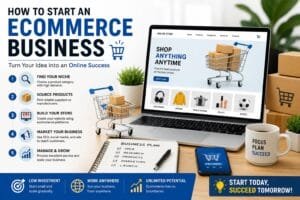
What Is an Ecommerce Business?
An ecommerce business sells products or services to customers through digital channels. Businesses can sell through their own websites, online marketplaces, social-commerce platforms, or a combination of different channels.
An ecommerce business may involve:
◆ Product sourcing
◆ Online store setup
◆ Product listings
◆ Catalogue management
◆ Payment processing
◆ Inventory management
◆ Order processing
◆ Shipping and delivery
◆ Customer support
◆ Digital marketing
The right approach depends on your products, target customers, budget, and business model.
Why Start an Ecommerce Business?
Before learning How to Start an Ecommerce Business, it is useful to understand why entrepreneurs choose online selling.
✦ Reach More Customers
An online store can help businesses reach customers beyond their local area.
✓ Start With a Focused Product Range
You do not necessarily need hundreds of products to begin. A focused catalogue can make it easier to test customer demand.
★ Build Your Own Brand
An ecommerce business gives you an opportunity to develop your brand identity, product presentation, and customer relationships.
🚀 Expand Gradually
Once your business becomes more organized, you can add products, marketplaces, marketing channels, and new customer segments.
Explore more:How Glowroad Account Management Services Benefit Online Resellers: 7 Proven Strategies
How to Start an Ecommerce Business Step by Step
If you are searching for How to Start an Ecommerce Business, the following steps can help you build a practical foundation.
✅ Step 1: Choose What You Want to Sell
Start with products that match your knowledge, resources, budget, and target market.
Consider:
◆ Customer demand
◆ Competition
◆ Product cost
◆ Selling price
◆ Shipping requirements
◆ Packaging costs
◆ Expected margins
◆ Product regulations
Avoid selecting a product only because it is trending. Research the market before purchasing large quantities of inventory.
➤ Step 2: Identify Your Target Customers
Understand who is most likely to purchase your products.
Think about:
✓ Age group
✓ Location
✓ Budget
✓ Buying preferences
✓ Common problems
✓ Product requirements
Knowing your target customer can help you make better decisions about pricing, product descriptions, advertising, and marketing.
★ Step 3: Research Your Competitors
Study businesses selling similar products online.
Review their:
◆ Product prices
◆ Images
◆ Product descriptions
◆ Packaging
◆ Customer reviews
◆ Offers
◆ Delivery options
Competitor research can help you identify opportunities to improve your own product and customer experience.
◆ Step 4: Prepare Your Business
Organize the applicable business information, banking details, tax information, product documents, brand information, and other requirements before launching.
Depending on your business model and products, specific registrations or licences may apply. Verify the requirements relevant to your business before starting operations.
✦ Step 5: Choose Your Selling Channel
You can sell through:
◆ Your own ecommerce website
◆ Online marketplaces
◆ Social-commerce channels
◆ Multiple channels
A website gives you greater control over your store experience, while marketplaces can provide access to an existing customer base. Many businesses eventually use a combination of channels.
🔹 Step 6: Create Your Product Catalogue
Prepare accurate product information before uploading products.
Your catalogue may include:
✓ Product titles
✓ Product descriptions
✓ Product images
✓ Product categories
✓ Product attributes
✓ SKUs
✓ Prices
✓ Inventory
✓ Product specifications
High-quality product information helps customers understand what they are purchasing.
🔄 Step 7: Set Up Payments, Shipping, and Inventory
Make sure customers have suitable payment options and that you have a reliable process for packing and delivering orders.
You should also maintain accurate inventory information so that customers do not purchase products that are unavailable.
🚀 Step 8: Launch and Promote Your Business
Once your store and operations are ready, launch your products and begin marketing.
You can explore:
◆ Search engine optimization
◆ Social media marketing
◆ Content marketing
◆ Paid advertising
◆ Email marketing
◆ Influencer collaborations
Start with channels that match your target customers and budget.
Explore more:How to Run Highly Profitable Ad Campaigns on Meesho
Common Mistakes When Starting an Ecommerce Business
❌ Choosing Products Without Research
A product may look profitable but have limited demand or excessive competition.
⚠️ Ignoring Total Costs
Consider product costs, packaging, shipping, marketplace fees, payment charges, advertising, returns, taxes, and other expenses.
❌ Using Poor Product Images
Customers cannot physically inspect online products, so clear and relevant images are extremely important.
⚠️ Writing Weak Product Descriptions
Descriptions should explain important features, specifications, dimensions, materials, usage information, and other relevant details.
❌ Buying Too Much Inventory
New businesses should carefully estimate demand before making large inventory investments.
⚠️ Ignoring Customer Service
Fast communication, reliable delivery, easy returns, and proper after-sales support can influence customer trust.
Best Practices for Starting an Ecommerce Business
✓ Maintain a Product Master Sheet
Keep product names, SKUs, prices, images, descriptions, specifications, and inventory information organized.
✦ Calculate Your Profit Margins
Do not focus only on the selling price. Calculate the complete cost of selling each product.
◆ Keep Product Information Accurate
Make sure product details, images, prices, sizes, colours, and specifications match the actual products.
★ Start Small and Test
Launching a focused catalogue can help you understand demand before expanding.
🔄 Monitor Customer Feedback
Reviews, returns, questions, and complaints can reveal areas where your products or service need improvement.
📈 Track Business Performance
Monitor sales, expenses, conversion rates, inventory, returns, customer acquisition costs, and other relevant metrics.
Explore more:Ecom Grow Services for E-Commerce Businesses: 7 Effective Ways to Grow Your Online Store
Benefits of Professional Ecommerce Support
Professional Ecommerce Business Setup and Management Services can be useful when you are learning How to Start an Ecommerce Business and do not have enough time or experience to manage every activity yourself.
⏱ Saves Time
Professionals can handle repetitive activities such as product uploads, catalogue management, and listing updates.
📂 Improves Organization
A structured process can keep product information, SKUs, inventory, listings, and orders easier to manage.
✓ Supports Marketplace Expansion
Professional support can make it easier to manage multiple online selling channels as your business grows.
🚀 Helps Manage Growing Catalogues
As you add more products, professional catalogue and listing support can reduce operational pressure.
How to Choose an Ecommerce Service Provider
When searching for help with How to Start an Ecommerce Business, look for a service provider that understands:
◆ Ecommerce business setup
◆ Seller onboarding
◆ Product listing
◆ Catalogue management
◆ Inventory support
◆ Marketplace account management
◆ Listing optimization
◆ Product uploads
◆ Order support
◆ Ecommerce operations
Ask about the provider’s experience, service scope, communication process, quality checks, reporting, turnaround time, and pricing.
Avoid providers that guarantee a specific level of sales or profit. Ecommerce performance depends on demand, pricing, competition, product quality, marketing, inventory, customer experience, and several other factors.
Why Choose EcomGrowSupport?
EcomGrowSupport provides practical ecommerce and marketplace support for brands, manufacturers, retailers, D2C businesses, exporters, and online sellers.
Our services can include:
◆ Ecommerce business setup
◆ Seller onboarding
◆ Seller account management
◆ Product listing
◆ Catalogue management
◆ Product uploads
◆ Listing optimization
◆ Inventory support
◆ Marketplace operations
◆ Ecommerce assistance
For businesses learning How to Start an Ecommerce Business, EcomGrowSupport can assist with important setup and marketplace activities through a structured workflow.
Frequently Asked Questions
1. How to Start an Ecommerce Business with a small budget?
Start with a focused product range, research your market carefully, control inventory costs, and choose selling channels that match your available resources.
2. Do I need a website to start an ecommerce business?
No. You can begin through marketplaces or other online channels. However, having your own website can provide greater control over your brand and customer experience.
3. How many products should I start with?
There is no fixed number. Starting with a manageable range can make it easier to test demand and understand your customers.
4. Is product research necessary?
Yes. Product research helps you understand demand, competition, pricing, costs, and potential opportunities.
5. What information is needed for product listings?
Depending on the selling channel, you may need product titles, descriptions, images, categories, attributes, SKUs, prices, inventory, and specifications.
6. Can I sell on multiple marketplaces?
Yes. Businesses can expand to multiple marketplaces when their inventory, resources, and operational systems can support them.
7. How can I attract customers to my ecommerce store?
You can use SEO, social media, content marketing, advertising, email marketing, influencer collaborations, and other suitable promotional channels.
8. Does starting an ecommerce business guarantee profit?
No. Profit depends on product demand, pricing, costs, competition, marketing, inventory, returns, customer experience, and other factors.
9. Can EcomGrowSupport help me start an ecommerce business?
Yes. EcomGrowSupport can assist with ecommerce setup, seller onboarding, product listings, catalogue management, account management, inventory support, and related marketplace services.
Conclusion
Learning How to Start an Ecommerce Business becomes easier when you approach each stage systematically. Begin by choosing suitable products, researching your target customers and competitors, preparing your business information, selecting the right selling channels, and creating accurate product listings.
After launching, focus on inventory, shipping, customer service, marketing, product quality, and business performance. As your business grows, professional ecommerce support can help reduce repetitive work and make marketplace operations easier to manage.
With proper planning, accurate product information, controlled costs, consistent customer service, and a willingness to improve, an ecommerce business can create a strong foundation for long-term online growth.